SORA RENTAL NOTE · 04
The contract says one year.
Can you stay for two?
For a residential studio lease covered by the law, the tenant can choose to leave at the end of the agreed year or claim protection for two years from the start of the original lease term. A one-year contract, two-year protection and leaving before expiry are three different issues.
Understand it through a comic
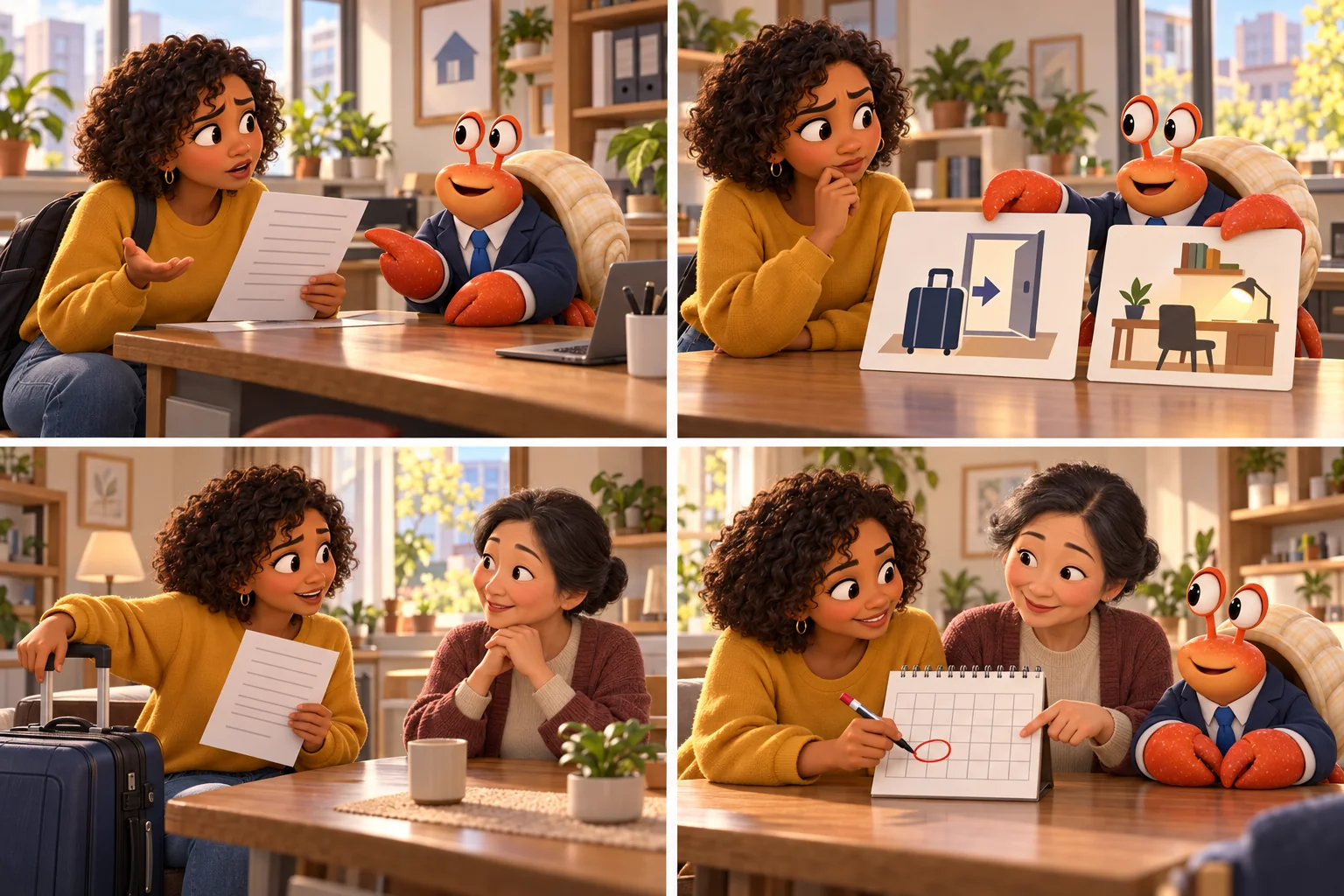
First check whether your one-year lease is covered by Korea’s Housing Lease Protection Act.
You may rely on the agreed one-year term or claim protection for two years from the start of the lease term.
If you plan to leave after one year, state the end date in advance and keep proof that the landlord received your notice.
Two-year protection is different from a right to end a lease whenever you wish. Arrange the deposit refund and handover too.
This comic illustrates an example. Read the article below for the conditions and exceptions that apply.
THE SHORT ANSWER
Start with these three points.
- 01
The tenant can claim a right to stay for two years
As a general rule, the Housing Lease Protection Act treats a residential lease agreed for less than two years as a two-year lease. The landlord therefore cannot force the tenant to leave solely because the one year written in the contract has ended.
- 02
The tenant can also rely on the agreed one-year term
This rule protects the tenant. The tenant may assert that the shorter, one-year agreement is valid and end the lease and request the return of the deposit when that year expires.
- 03
This does not let you leave whenever you want during the term
Leaving before the agreed year ends—for example, after six months—is a separate matter. Check the contract terms, any agreement with the landlord and any statutory ground for termination.
The key point A one-year lease gives the tenant a choice to leave after the agreed year and protection to stay for two years. It does not give the landlord a unilateral right to make the tenant leave after one year.
TWO CHOICES
As the first year approaches its end, decide what you want to do.
- Continue living there
- Plan to leave
- Notify the other party
| Your plan | What it means legally | Practical steps | What to watch for |
|---|---|---|---|
| Leave after one year | The tenant relies on the validity of the agreed shorter term | Before the agreed expiry, clearly state that you will end the lease under the one-year agreement, and keep proof of receipt. To prevent disputes, it is advisable to contact the landlord comfortably more than two months in advance | Also agree on the deposit refund date, utilities and management charges, and the time for handing over the keys |
| Stay for two years | The tenant relies on the statutory two-year protection for the original lease | Record your intention to stay and continue fulfilling your obligations, including rent and management charges | This means two years in total from the start of the original lease term, not a new two years after the first year |
| Leave before one year ends | This is early termination during the agreed term | Check the lease and special clauses, and agree on the end date and costs with the landlord in writing | The statutory two-year rule alone generally does not permit immediate termination |
NOT ONE PLUS TWO
If you stay quietly beyond one year, do you get three years in total?
- Contract terms
- Duration
- Legal requirements
No. The case-law explanation in the Housing Lease Dispute Mediation Committee’s FAQ distinguishes relying on the validity of the shorter term to exercise the tenant’s rights, such as claiming the deposit, from treating the end of that shorter term as the start of a new implied renewal.
The protection period runs from the start of the original lease term.
- If the original lease term started on March 1, 2026, the two-year protection period is also measured from that date.
- The agreed one-year term ending on February 28, 2027 does not automatically add a fresh two years from the following day.
- If you remain for the original two years, check the separate requirements for ending or renewing the lease around the end of February 2028.
DATE EXAMPLE
What if your one-year lease term began on March 1, 2026?
Check the lease’s stated start and end dates. Keep a separate record of the actual move-in date and address-registration date, because these matter for enforceability against third parties.
This example allows comfortably more than two months to communicate your intention and confirm receipt, helping prevent disputes. If that point has already passed, do not assume you must automatically stay for two years. Check the contract and the history of any notices.
If you chose to remain, review your plans and the requirements for ending or renewing the lease at the two-year point measured from its original start date.
These dates are illustrative. To calculate the actual expiry, first check the start-date and end-date wording in your contract, and account for calendar details such as leap years and month-end dates.
TENANT CHECKLIST
Once you decide, keep a record of these four things.
- Lease dates
- Notify the other party
- Supporting evidence
- Lease type
Check that it is a residential housing lease
Start with the address and unit number, the purpose of the lease and its start and end dates. Whether the law applies may depend on how the property is actually used and the circumstances.
- Your choice
Be clear: leave after one year or stay for two
Instead of saying “I might move,” state your intended end date or intention to stay, with specific dates.
- Proof of receipt
Check when the notice was received, not only when it was sent
Use a method that leaves a record, such as a text message, KakaoTalk or email, and keep the landlord’s acknowledgment. If a dispute is likely, consider a formal content-certified letter (내용증명) as well.
- Settlement
Put the deposit and key handover on the same schedule
If you are leaving, agree in writing on the deposit refund, rent, management charges and utilities, the condition check and the date for handing over the keys.
FREQUENTLY ASKED
Four common questions about a one-year lease.
If the contract says one year, must I leave after one year?
No. The tenant can claim a right to stay for two years from the start of the original lease term. The landlord cannot force the tenant out solely because the agreed one-year period has expired.
Does the tenant have to stay for two years?
No. The tenant may rely on the validity of the agreed one-year term, end the lease at that point and request the return of the deposit.
If I stay without saying anything after one year, is another two years added?
No. The case-law explanation in the official FAQ measures the statutory two years from the start of the original lease. It does not treat a fresh two years as automatically added after the first year.
Can I leave after six months of a one-year contract?
Two-year statutory protection is not a rule allowing free termination at any time. To leave during the agreed term, check the contract, a possible agreement to terminate and any statutory ground for termination separately.
CHECKED SOURCES
Based on checked official materials.
- Korean Law Information Center Housing Lease Protection Act, Articles 4 and 6 · Checked October 3, 2026↗
- Korea Real Estate Board / LH Housing Lease Dispute Mediation Committee FAQ on one-year agreements and statutory two-year protection · Checked October 3, 2026↗
This is general information based on legislation and official dispute-mediation materials checked on October 3, 2026, not legal advice on an individual contract. The result may depend on the contract wording, residential use, the timing and receipt of notices, and the renewal history. For an actual dispute, consult a legal professional.